
AI Will Change Marketing Jobs Forever
The marketing landscape in 2025 is a whirlwind of data, channels, and increasingly sophisticated customer expectations. Amidst this evolution, one force stands out as a true disruptor, promising both immense opportunities and significant shifts: artificial intelligence. It’s no longer a futuristic fantasy; AI is actively reshaping how marketing operates, from content creation and data analysis to campaign management and customer interaction.
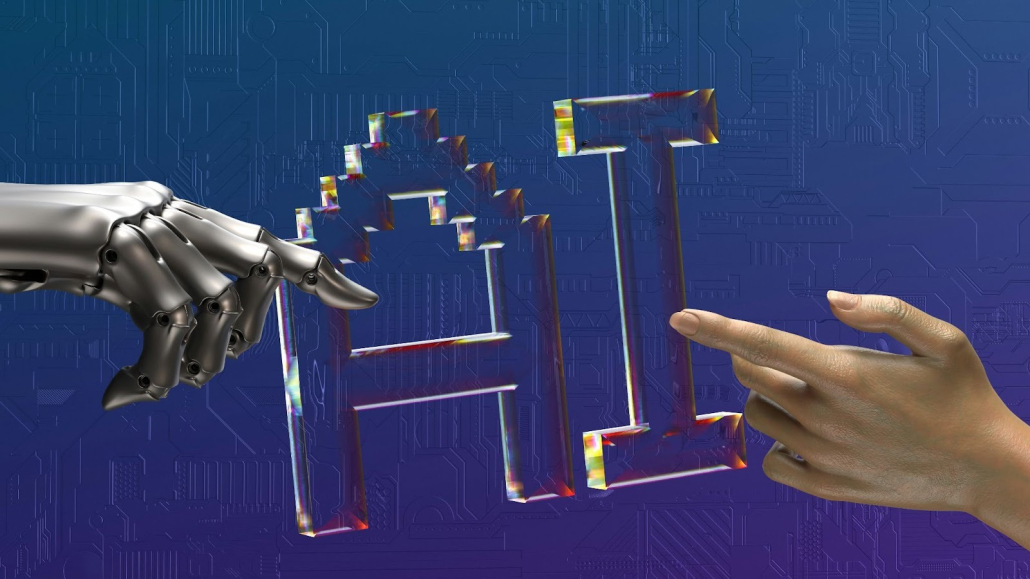
Alt: Two hands reaching towards each other with a text saying “AI”.
Understanding the profound impact of AI is no longer optional for marketing professionals, it’s a prerequisite for staying relevant and thriving in the years to come. For businesses navigating this transformative period, partnering with forward-thinking entities like nitro bet becomes crucial. They recognize the seismic changes AI is bringing and are equipped to help companies leverage these technologies to enhance their marketing strategies and achieve tangible results.
The Automation Revolution: Freeing Up Human Potential
One of the most immediate and tangible impacts of AI in marketing is the automation of repetitive and time-consuming tasks. Imagine the hours spent manually sifting through data to identify trends, crafting basic social media posts, or segmenting audiences for email campaigns. AI-powered tools are now capable of handling these tasks with remarkable efficiency and speed. This doesn’t signal the redundancy of marketers; rather, it liberates them from the mundane, allowing them to focus on higher-level strategic thinking, creative endeavors, and tasks that require uniquely human skills like empathy and nuanced understanding of the target audience.
AI excels at tasks like:
- Data Analysis and Reporting: AI algorithms can process vast datasets far faster than humans, identifying patterns, correlations, and insights that would otherwise remain hidden. This empowers marketers to make data-driven decisions with greater speed and accuracy.
- Content Generation (Basic): While AI might not replace creative copywriters entirely, it can assist in generating initial drafts for blog posts, social media updates, and ad copy, significantly reducing the time spent on initial content creation.
- Campaign Optimization: AI can continuously monitor campaign performance across various channels, automatically adjusting bids, targeting parameters, and ad creatives to maximize ROI in real-time.
- Audience Segmentation and Personalization: AI algorithms can analyze customer data to create highly granular audience segments and deliver personalized content and offers at scale, enhancing engagement and conversion rates.
- Chatbots and Customer Service: AI-driven chatbots can manage routine customer questions around the clock, offering immediate assistance and freeing up human support staff to concentrate on more complex customer needs.
The Rise of New Roles and Skill Sets
While AI automates certain tasks, it’s also giving rise to entirely new marketing roles and demanding a shift in essential skill sets. The marketing teams of the future will likely include professionals specializing in areas that bridge the gap between marketing expertise and AI capabilities. Some emerging roles include:
- AI Marketing Strategist: Individuals who understand both marketing principles and AI technologies, responsible for developing and implementing AI-driven marketing strategies.
- Prompt Engineer for Marketing: Specialists skilled in crafting effective prompts for generative AI tools to produce high-quality marketing content and assets.
- AI Analytics Specialist: Professionals who can interpret the complex data generated by AI marketing tools and translate it into actionable insights for strategic decision-making.
- Marketing Automation Specialist (with AI focus): Experts in leveraging AI-powered marketing automation platforms to create sophisticated and personalized customer journeys.
- Ethical AI in Marketing Manager: As AI becomes more integrated, ensuring ethical and unbiased use of these technologies will be crucial, leading to roles focused on data privacy, transparency, and avoiding algorithmic bias.
The key skills for future marketing professionals will increasingly involve:
- AI Literacy: Understanding how AI tools work, their capabilities, and their limitations.
- Prompt Engineering: The ability to effectively communicate with AI to achieve desired outputs.
- Data Interpretation and Analysis: Being able to understand and draw meaningful conclusions from AI-generated data.
- Strategic Thinking: Focusing on high-level strategy and brand building, while AI handles execution.
- Creativity and Emotional Intelligence: Skills that AI currently lacks and remain crucial for impactful marketing.
- Adaptability and Continuous Learning: The AI landscape is constantly evolving, requiring marketers to be lifelong learners.
The Human Element Remains Crucial
Despite the transformative power of AI, it’s crucial to remember that marketing is fundamentally about understanding and connecting with human beings. While AI excels at data processing and automation, it currently lacks the crucial elements of creativity, empathy, and nuanced understanding of human behavior that drive truly successful marketing campaigns.
AI can assist with content creation, but it cannot replicate the emotional resonance of a compelling brand story crafted by a human. It can analyze data to identify trends, but it cannot replace the strategic insight of a marketer who understands the underlying motivations and cultural context of their target audience. Building genuine customer relationships requires human interaction, empathy, and trust, qualities that AI, in its current form, cannot fully replicate.
The future of marketing lies in a synergistic partnership between humans and AI. Marketers will leverage AI as a powerful tool to enhance their efficiency, gain deeper insights, and personalize customer experiences at scale. However, the strategic vision, creative spark, and human connection will remain the unique and indispensable contributions of marketing professionals.
In conclusion, AI is not poised to replace marketing jobs entirely. Instead, it will fundamentally reshape them, automating routine tasks, creating new roles, and demanding a new set of skills. The marketers who embrace AI, adapt their skill sets, and focus on the uniquely human aspects of their profession will not only survive but thrive in the exciting and evolving marketing landscape of the future. Businesses that recognize this shift and strategically integrate AI with human expertise will be best positioned to connect with their audiences in meaningful ways and achieve sustainable success.
Leave a Reply
Want to join the discussion?Feel free to contribute!